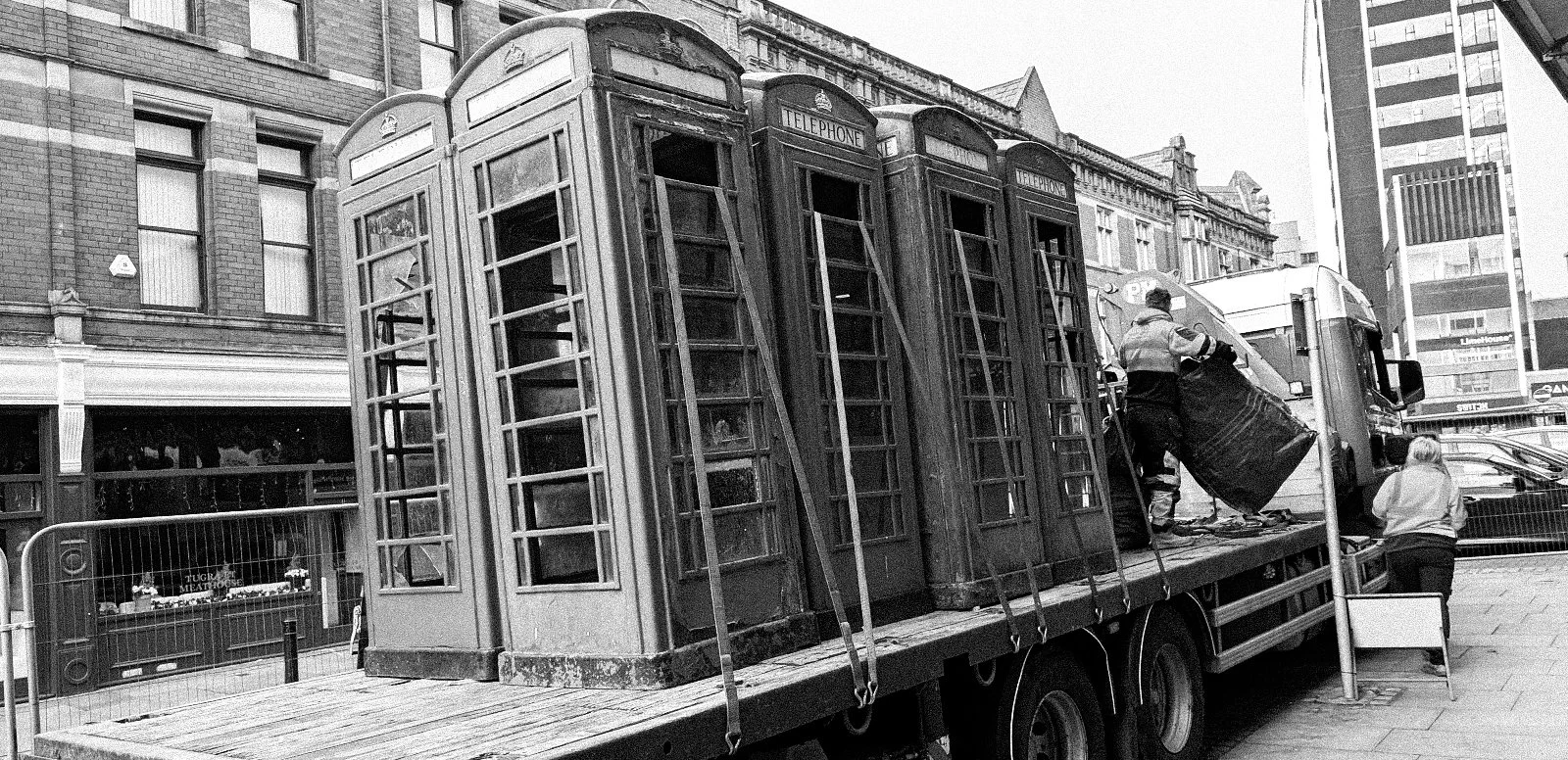
A piece of Preston’s history is heading back.
The famous telephone boxes.
One of Preston’s most recognisable landmarks is preparing for a dramatic return.
The city’s famous row of red telephone boxes – believed to be the longest surviving line of traditional phone kiosks anywhere in the UK – has secured all the permissions needed to be transformed into a striking digital art installation in the heart of the Harris Quarter.
Planning permission, listed building consent, advertising consent and change of use approval have now all been granted, clearing the way for the next phase of the project.
The nine Grade II-listed kiosks, which once stood outside the former Head Post Office on Market Street, have already been painstakingly restored and are currently being stored off-site. Soon, they’ll be brought back into the city centre with a completely new purpose.
Rather than carrying phone calls, the boxes will become a giant digital canvas. Bespoke screens will be installed inside each kiosk, creating a unique public artwork stretching across the full row. Speakers will also provide ambient sound, helping turn the installation into an immersive feature for residents and visitors alike.
Preston-based digital media specialist ADI.tv has been commissioned to deliver the project, with work now turning to underground cabling and infrastructure ahead of the kiosks’ return later this year.
The scheme forms part of the wider transformation taking place across the Harris Quarter, where investment continues to reshape one of the city’s most historic and culturally significant areas.
Councillor Valerie Wise, Deputy Leader of Preston City Council and Cabinet Member for Community Wealth Building and City Regeneration, said the project shows how heritage and innovation can work hand in hand.
“The project combines heritage preservation with innovation, giving the boxes a new lease of life for future generations,” she said. “Not only will they look amazing, they will provide a real spectacle for visitors to enjoy.”
She added: “This is a great example of how we can modernise heritage assets in a way that respects Preston’s character, yet still has relevance in a modern society.”
The restoration has been supported through Government regeneration funding alongside investment from Preston City Council, with architects Studio John Bridge supporting the planning process.