The power of partneships
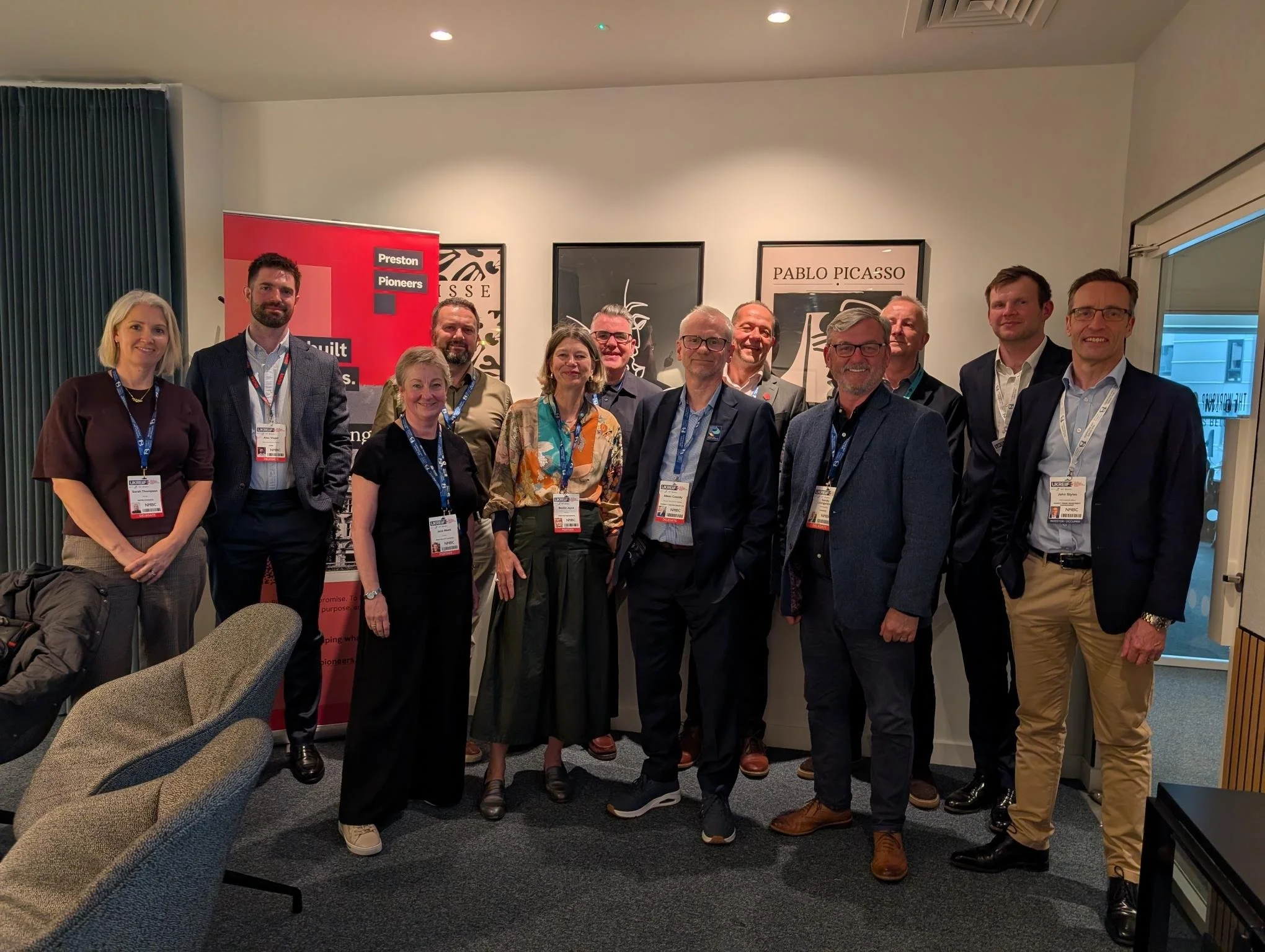
Industry leaders came together at UKREiiF
A successful Lancashire needs a successful Preston.
For the third year running, Preston attended UK REiiF in May, held at the Royal Armouries at Leeds Docklands. With over 16,000 delegates attending the UK’s leading Real Estate and Infrastructure Forum, it was important for Preston to make its mark.
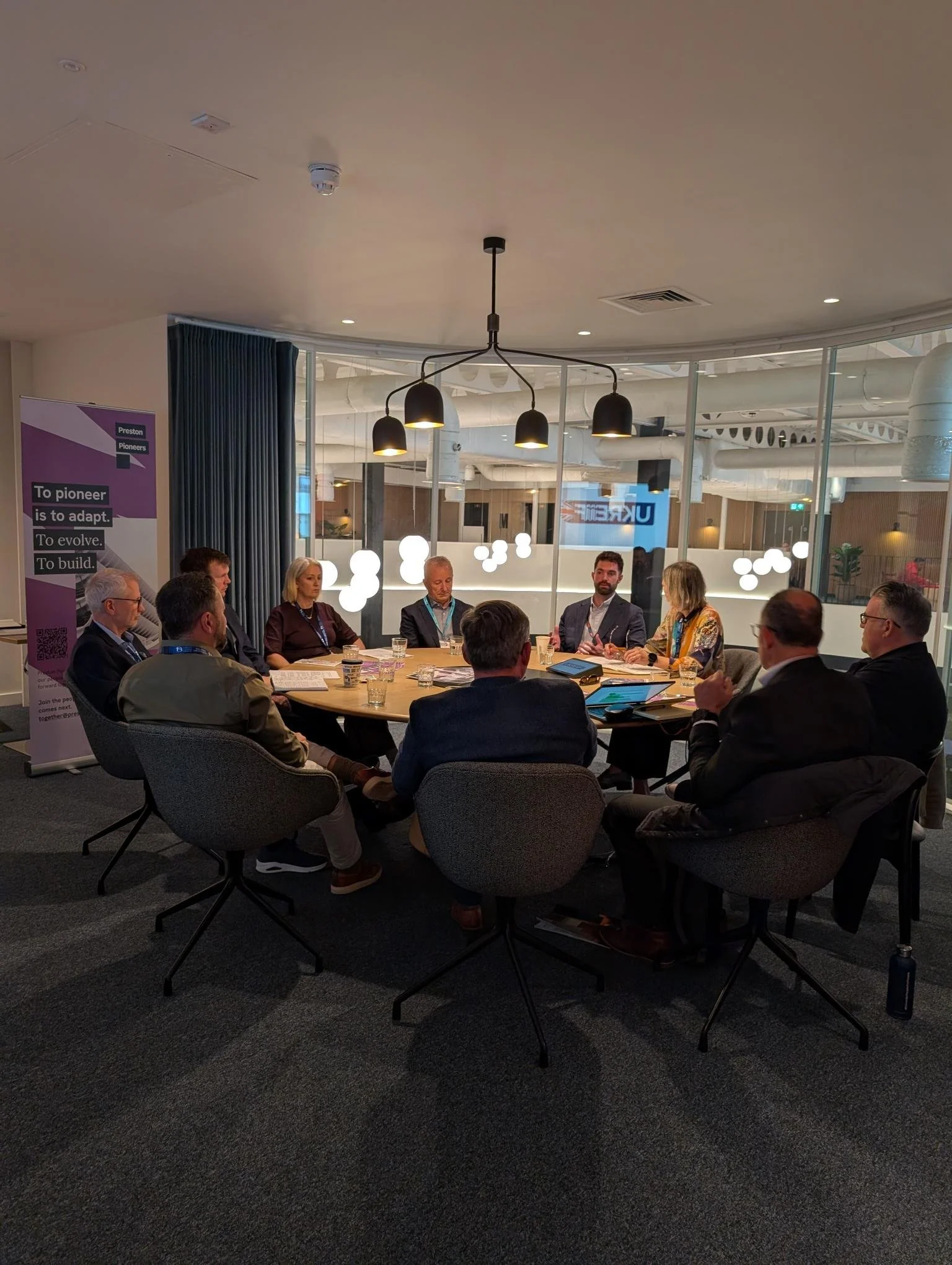
The highlight for Preston at this year’s UK REiiF was to host its first round table event at the conference, bringing together experts and practitioners from the industry of regeneration and development.
Guests had an open discussion about the City of Preston’s potential investment opportunities. Everyone recognised that Preston is at a pivotal place in its journey and perfectly positioned for future investment and opportunity.
Much has been achieved in recent years but there is still plenty to do. As Lancashire re-works the mechanics of local government and true devolution, now is the time for Preston to set out what it needs to do and how it’s going to do it.
The session opened with a first look at the launch video for Preston Pioneers, our place making campaign which celebrates the pioneering spirit of Preston and its people.
Guests agreed that this inward investment narrative is what Preston needs to be doing more of – being more outward facing and taking a strong position of leadership within Lancashire.
Preston is Lancashire’s biggest city by geography, size and economic output and has the unique ability to influence the future of Lancashire, sitting at the heart of two nationally significant industries - nuclear and defence. The public sector’s role will be to leverage that potential, delivering good economic development and regeneration, facilitated through strong working partnerships.
Preston’s role is to position itself as the urban, commercial core of Lancashire and a great place for office-led investment. Historically, Lancashire has not been a place associated with large scale commercial investment and there needs to be a shift in this perception in London and beyond. The city needs to be on the government’s radar as a place where growth can happen at pace, in an urban centre. We’ve seen what has been done in Manchester and Liverpool, but where’s the next place for growth? Articulating what Preston can do to support the national economy is essential to getting government’s attention, letting them know the city is ready and we can do it.
Funding and viability
Preston has existing strong governance structures such as the Preston Regeneration Board, which is a massive asset in the city, a regeneration collaboration made up of key partners – Lancashire County Council, Preston City Council, University of Lancashire, and Preston Partnership representing the private sector. Views were canvassed as to how to enable further regeneration.
Would a more formal structure deliver projects or resolve viability gaps?
What are the projects the place is trying to deliver?
Is the barrier to delivery resolved by setting up a delivery vehicle?
Viability issues are a challenge that many comparative towns and cities across the UK are wrestling with. Establishing a more formal structure to assist delivery is something that the Preston Regeneration Board is considering. The majority view round the table was that the key to success is not necessarily a formal development vehicle, rather, it was essential to have the right decision makers around the table, with a shared vision, a can-do attitude and joint ambition.
Collaboration is key
So what does it take to attract large scale, significant, inward investment into Preston? The place needs to be in an investable, ready position and the key questions are:
Is there a leadership team that investors and developers can get behind?
Is there a vision that everyone believes in?
Is there clarity around the key components?
It’s important the right people are working together with a shared focus. Pick the key projects and commit to driving them forward. There will always be challenges. It’s not enough to have an idea, the legwork and case-making needs to be done in advance of funding coming available and partners have to be ready to commit to investing in the pre-development work, with no certainty that development funding will be secured.
Other places have been successful in securing large pots of funding because they have already spent three or four years investing in economic case making, carrying out site investigations and planning to demonstrate that public sector investment represents good value. Councils need to be prepared to work with private sector partners to fully understand the opportunities and challenges of projects. Equally, if a Council tries to have all the answers before it starts to talk publicly about an idea or a scheme, the opportunity for real discussion with communities, stakeholders and potential end users is missed.
The best advice is to keep moving forward, have those discussions early on. As long as the people around the table want the same things and have the same vision and objectives, it can be resolved. There will be challenges, there will be difficulties to face, things will go wrong, but if you wait until you have all the answers, the time has gone and most probably, so too, has the funding.
The real power to change is bringing people together.
As the County waits to hear what the outcome will be for government reorganisation, one thing is clear, local communities, businesses and developers are less interested than local politicians as to where Preston’s administrative boundaries will be drawn, the projects and the opportunities will still be there and it is time now to seize the day and make the most of the opportunities available in the city. Confidence, clear communication and collaboration between partners with a shared ambition is key.
The event was supported by the Preston Regeneration Board.